
Notes from an Exclave
A part of Angola that stands on its own

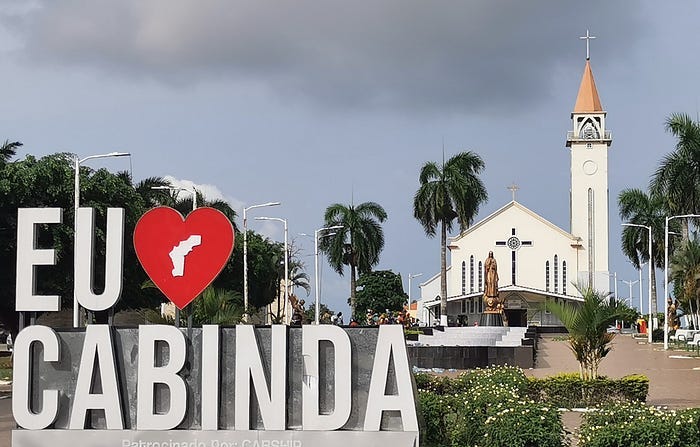
One of my roommates from college, who graduated in mechanical engineering, took his first job at a company specializing in oil rig infrastructure on the offshore petroleum fields off the coast of Africa.
We communicated a year later, and he told me that most of his time had been spent on rigs off the coast of Cabinda, a small Angolan exclave north of the mouth of the Congo River. He said it was terrible and he hated being there.
In the years since, I had occasionally seen Cabinda pop up on the news, usually due to fighting between the Angolan government and one of the separatist groups seeking Cabinda’s independence from the mother country.
Nothing positive about this exclave had built up in my mind. This was perhaps the best reason to visit.
We strolled across the twenty-meter strip of no-man’s land between the Republic of Congo and Cabinda, an unremarkable stretch of broken asphalt road bracketed by chain link fencing and rusted barbed wire, overgrown with weeds. The first person I interacted with was an Angolan police officer slumped in a chair. He leafed through my passport and held it up, waving it like a fan. “America bom! Bem-vindo a Angola.”
I thanked him and moved on, relieved that my visa-free status in Angola had not changed since I had last checked a few weeks earlier. What had changed was that, as of January 1, 2026, most Angolans were no longer eligible to apply for a U.S. tourist visa. This is despite all the onerous paperwork it entailed, far more than I have ever been asked for in any visa application, anywhere. I know because I’ve read through the requirements. This effective ban resulted from the infamous Presidential Proclamation 10998. I wondered if the police officer knew of that racist irony of that proclamation (many of the countries adversely affected are African, while, simultaneously, white South Africans have been explicitly invited to immigrate to the US).
There was a long form to fill out at the immigration office. The one female agent stepped out into the hall with her cell phone and made us stand against the wall for photos, as if we were getting mug shots. She broke character and smiled when I made a lame joke about it in Portuguese.
By the time we had gone through the various offices, sat through the filling out of ledger details (all by hand), and squeezed onto a shared minivan, I could feel the shift in atmosphere. The French language and manner were gone, replaced by something more relaxed, along with the familiar slurry of Portuguese sounds.
Cabinda is a small territory, shaped like a distorted ‘L’ and with only one large town, also named Cabinda. Or, as the locals call it, Cidade (city). For the next two hours, we sweated, squashed together in the heat, first through mangrove swamps, then low hills scarred red with the erosion of tropical soils.
Somewhere out there, far off the main roads, were the armed groups agitating for Cabinda’s autonomy. The main organization was the Front for the Liberation of the Enclave of Cabinda (FLEC), which has since splintered into several sub-groups. They have been active since Angola’s independence in 1975, providing a slow but constant dribble of violent confrontations with the Angolan army to demonstrate their relevance. The last battle, in which nearly 30 people were killed (mostly Angolan soldiers), was in June of 2025.
The discovery of offshore petroleum, however, has ensured that the Angolan government will never allow this now valuable exclave to break away. Oil currently provides nearly 30% of the nation’s GDP and 95% of its exports.
Cidade had the standard Latin design of framing the old downtown district around the cathedral and plaza. We made our minivan exit at a busy traffic circle in the middle of town.
It was hard to put my finger on what had changed upon crossing the border. Language was the most obvious, but there were other, more subtle signs. The way people interacted felt softer. Among the women, straightened hair was all the rage, sometimes with blond tips. Many people on the street were smartly dressed, not ostentatiously so, but enough to notice a difference from the Francophone countries to the north.
Nowhere did I see a mosque. It was as if the continuous line of cultural influence, the mixing of Muslim Sahelian traders from Chad with their French-speaking compatriots in the thick equatorial jungles, ended at the Congo River. A default boundary created through centuries of arbitrary geographical separation by the colonial powers of France, Belgium, and Portugal.
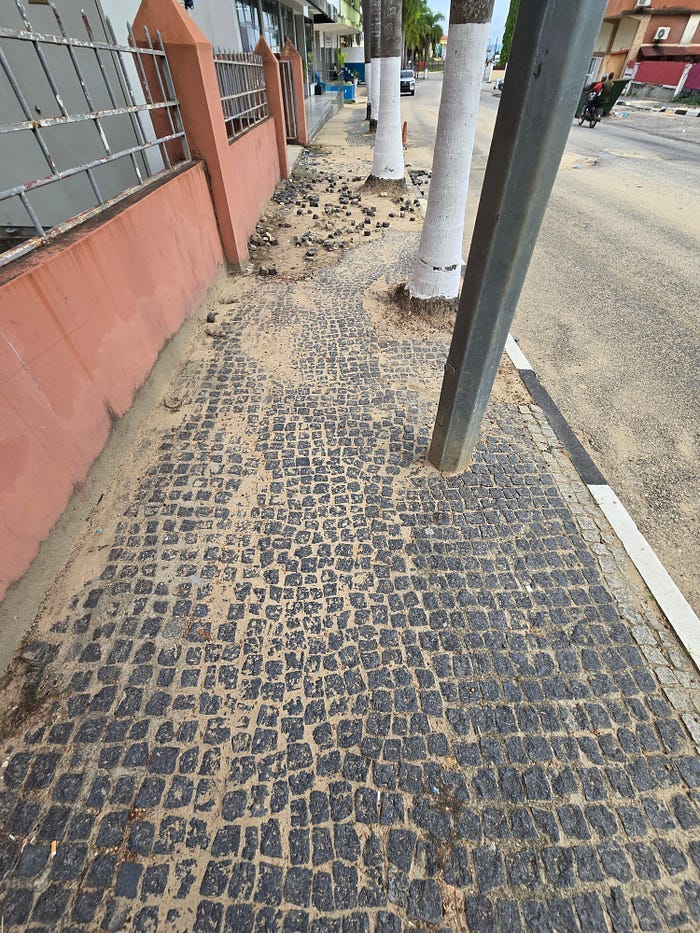
There were unmistakable signs of Portuguese influence in Cabinda. Sidewalks composed of rectangular and square tiles were reminiscent of any major city in Portugal. We ducked into a café for a coffee and a pastel de nata. For a moment, it felt like being in Lisbon.
Cabinda’s history has set it apart from the rest of Angola. When the Portuguese established a presence here centuries ago, the deal negotiated with the local tribes made it a Portuguese protectorate, rather than politically contiguous with the colony of Angola. It was physically severed from the latter by the Berlin Conference in 1885, which allowed Belgium’s King Leopold II a strip of land for coastal access into his Congo fiefdom at the mouth of the Congo River. Over the next one hundred years, Cabinda would slowly develop its own identity.
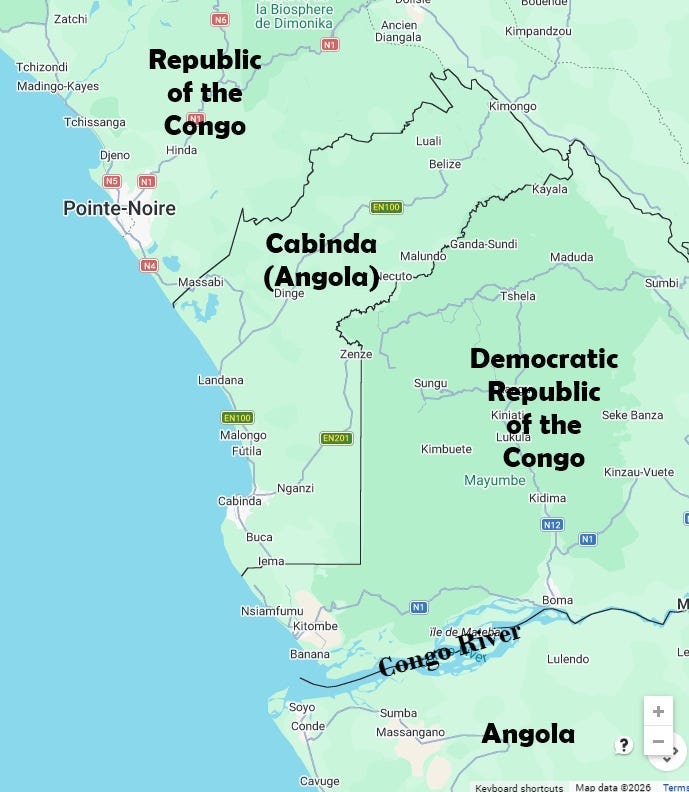
As a result of decades of fighting between the Angolan army and local insurgent groups, the exclave was granted a certain degree of autonomy and some control of local oil revenues in 2006. Alas, this was not enough to stop the attacks.
I felt there was a degree of organization and wealth here that I would not see repeated in Angola proper. This turned out to be correct, as the coming weeks of my trip confirmed.
I met Francisco at the Cabinda ferry terminal while standing in line to get tickets. He worked at the local port facility, which served both the regular flow of domestic and international goods and the needs of many offshore oil rigs. His home, however, was in Luanda, the capital of Angola, almost 400 kilometers to the south. He returned every month to be with his wife and daughter on a 28-day on/off rotation. I asked if he thought that was an expensive and tiring commute, involving over a day of his time, and at 22,000 kwanza (about $20), the one-way ferry ticket wasn’t so cheap. It went only to Soyo, a town at the very north tip of Angola proper, after which he would have to pay a bus fare onward.
He said that it was a far better deal than working in Luanda, a sprawling, crowded city of nine million where job opportunities and pay were not nearly as good. Several of the other people standing in line around us were his co-workers, all doing the same thing.
There were surprisingly few places to eat in Cabinda, and those we found were relatively expensive. Lodging prices were also elevated, which I took as evidence that the market was heavily influenced by foreign workers occasionally finding themselves in transit. Our hotel had an efficient, courteous receptionist in a suit, which, in my extreme budget mentality, I found disorienting and suspicious. I did a double-take on the room price just to make sure it wasn’t more expensive than I had been told beforehand.
The local market was a dark, cavernous warehouse with a strict division of labor. Men sold cell phone accessories, and women sold fruits and vegetables. We were not interested in either; we were looking to hook up with a black-market currency exchange.
Soon enough, the right people appeared, flashing stacks of Angolan kwanza at roughly 1,000 to 1 against the US dollar. Negotiations continued back out into the street, and once the rate was secured, we were invited to duck into a women’s shoe shop for the counting. The owner rolled her eyes and sighed when our little group barged in, laying out money on the counter and sorting it into piles. No sales for her, just men doing their own, quasi-illegal business on her turf.
It gave me pause that the local currency was so weak, considering the mighty power of petroleum exports. But Angola is a huge country with vast wealth disparities, in which only the well-connected are positioned to benefit. Most notable of these are members of the dos Santos family, who, by virtue of their proximity to the late president José Eduardo dos Santos, have sunk their fingers deeply into the petroleum industry. These members include the controversial Isabel dos Santos, daughter of the former leader and touted as Africa’s richest woman.
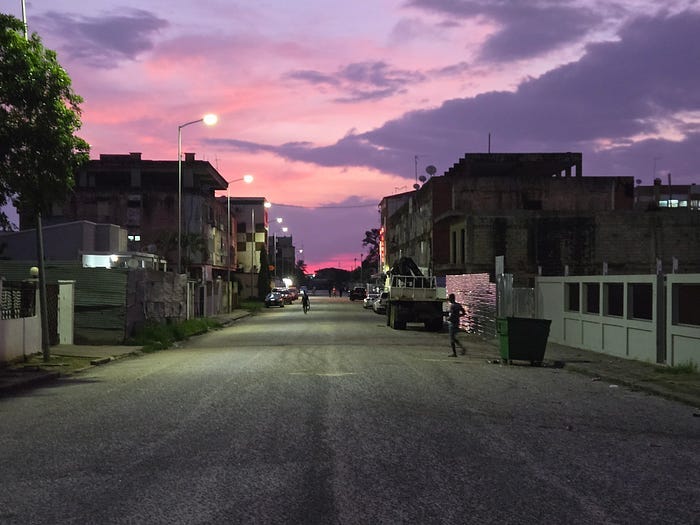
I had been led to believe that the ferry onward from Cabinda would be a panicked chaos. The route was a chokepoint for Angolans moving between Cabinda and Angola proper. There was only one economically viable alternative: endure the fickle bureaucracy and logistical delays of an overland passage through the Democratic Republic of the Congo.
What I found, however, was that the procedure for buying ferry tickets was straightforward and well-organized. Knowing Portuguese helped, but wasn’t critical.
It contrasted with the often-held perception I encountered among many foreign travelers on the African continent. There are endless complaints about inefficiency, disorganization, and scams that underscore their travel experiences. The Cabinda ferry, which runs daily from Cidade to Soyo, a trip of four hours, was one such rich source of complaint from online traveler groups.
I wondered which pleasant, alternate universe I was living in after buying my ticket, having my bag weighed (over 20kg would incur an additional fee), and standing in line. Admittedly, it did take hours to go through security and sit in the (air-conditioned) departure lounge, but none of it was a noticeable inconvenience, considering. The ferry itself was not an overcrowded, leaky hulk, but a new-ish vessel with plenty of seating and a snack bar.
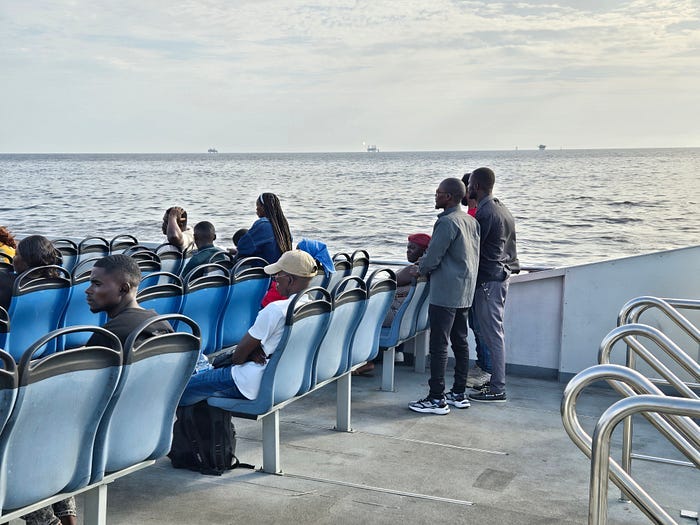
There were two highlights of the ferry ride. The first were the oil derricks that dotted the horizon, some just inactive shells, but others actively pumping and burning off natural gas.
The other was the mighty mouth of the Congo River, which we had just stood at the edge of in Brazzaville a week earlier. The river has such an immense outflow that it carves a deep furrow in the submarine continental shelf and creates a thick, sediment-laden plume for many kilometers offshore.
As we moved through this muddy plume, fins appeared occasionally, trawling the water and moving almost as fast as the boat. I asked a passenger about this, and he told me it was a fish, like a shark. There is undoubtedly a whole ecosystem that thrives on the mix of sediment-laden freshwater and the Atlantic’s oceanic currents, and those fins were a reminder of that mostly invisible world.
In retrospect, I could hardly have asked for a better introduction to Angola than through the exclave of Cabinda. It offered a quiet, relatively well-off window into what Angola could be if the country’s immense natural wealth reached more hands. As I would discover in the coming weeks, the capital, Luanda, represented a very different, grittier, more impoverished, and noisier face of the country.
Back when I was standing in line with Francisco the day prior, I asked him whether he preferred Cabinda or Luanda, since he was well acquainted with both. He demurred, “The job is good, and I am happy for that, but I want to be home and with my family more.”
The story of the African migrant worker, in a nutshell.
Thank you for taking me to places I have never been. Your observations are sharp and I enjoy your reflections on what you encounter.
"Nothing positive about this exclave had built up in my mind. This was perhaps the best reason to visit." ⬅️ Your travel philosophy in a nutshell! 😄
What was the Congo border city you entered from?