
Gathering the Crumbs
Part 15 in a conversation between Matthew David Nelson and Brad Yonaka and about travel and literature


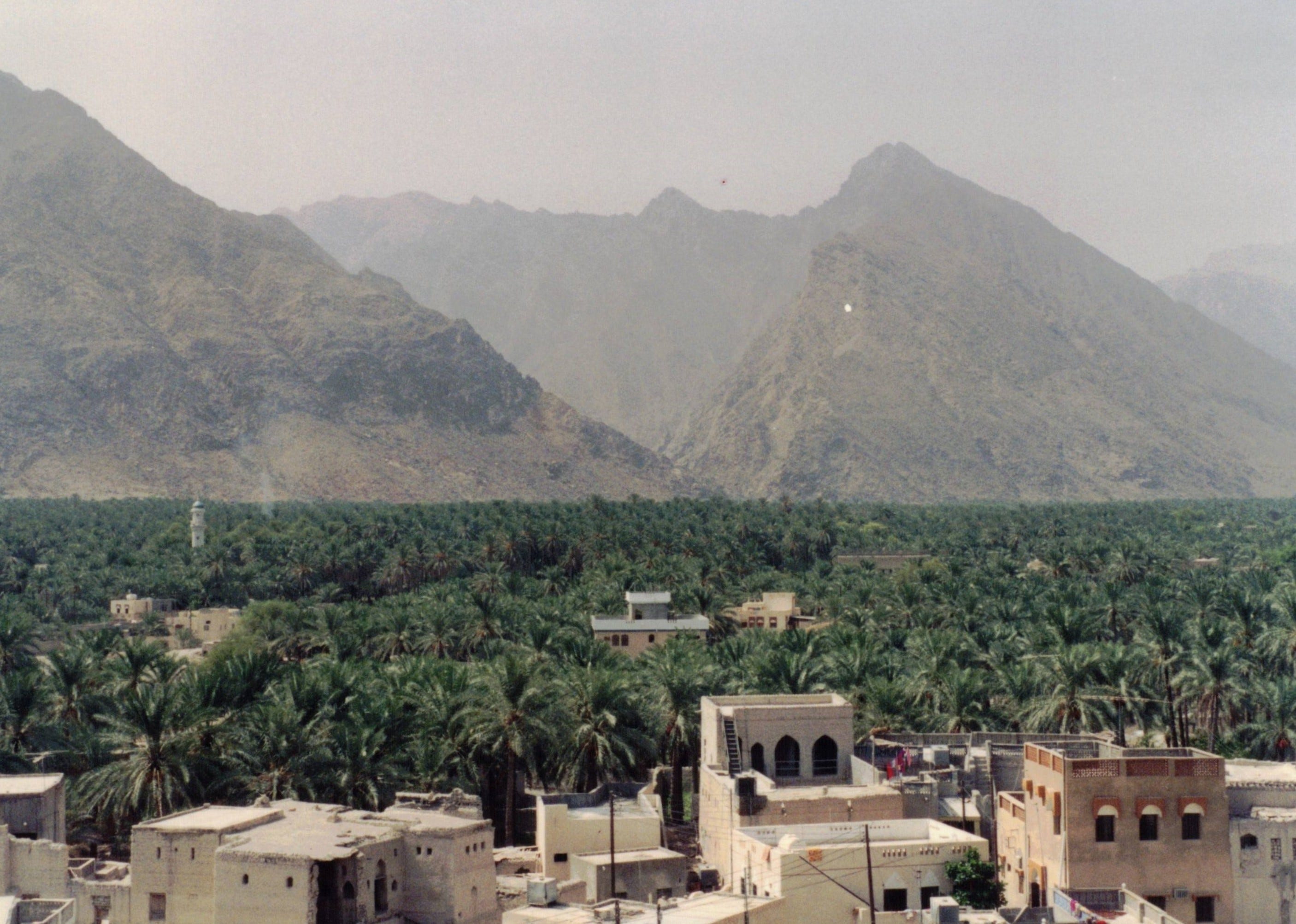
Omani soldiers of old demonstrate the influence of India and of the Zulus from South Africa. Loan words from all these places influence Omani Arabic, and many Omanis speak Arabic with a Swahili accent. Globalizations happened in Oman and the rest of the Indian Ocean in antiquity and in the early medieval era long before it did in other places, leading to an extraordinary level of sophistication.
– Robert Kaplan, Monsoon
The previous article:

Thank you for continuing to share insights into your writing process. It is interesting to see the variations in how we approach it.
I also thought Dave Paquiot articulated a point about our previous discussion that said it far better than I could.
In the back of my mind, I was thinking about journeys I made over 30 years ago. When I look back on how I wrote about those times, I realize how much my understanding of the world has changed. In many cases, my descriptions and opinions are well documented in my journals, but my conclusions would undoubtedly be different now.
There were aspects of travel and places I visited that I was not aware of at the time. Easily-accessed information was not what it is today, and my ability to step outside myself was imperfect. This surely biased me in certain ways. In reading through those journals now and constructing stories from them, it is inevitable that I will bring some modicum of wisdom to the raw emotion and potential fallacies I may have expressed on those pages.
In that respect, I’m glad that the material is still unused and available for me to reassemble. I would not have wanted some of my past perspectives to escape into the public sphere unfiltered.
Your first question:
I’d be curious to know what your journaling/gathering process looks like, and how your writing process differs when working on something recent versus digging into memories from the past.
My current gathering process is rather image-heavy, since I have unlimited ability to record images. I spend less time describing everything I have a photo of and more time trying to accurately remember conversations and non-visual sensory elements. The conversations are especially important because it is all too easy to forget the details.
I don’t spend much time on overarching impressions, but I will focus on one random thing that meant something to me at the time and use it as a bookmark. It might be the way two monks interact, or the way a market seller bargains with a customer while I am standing nearby. It’s like gathering crumbs from some piece of bread I’ve eaten. I find that later, this helps unlock the rest of it.
Mining past memories is a whole different process. About five years ago, I pulled boxes from storage, gathered materials like old journals and photos, and put everything in order. The process took over a year. I scanned the journals and diaries so that all that information could travel with me digitally. I also scanned the photos (prints and slides) and used the negatives of the former to order them by position within the roll. Hundreds of rolls, thousands of images, including those made by my father before I had access to photographic equipment. This was extremely helpful, as the identities of some photos had become a mystery, and tying the photo sequence to a journal entry or film processing date usually solved it. I was impressed at how the pairing of these activities brought back so many memories.
Your second question:
I also wanted to ask about your experience as a geologist, primarily if you’ve considered writing a longer-form narrative that goes into the travels brought about by your profession? I think this could be very interesting to readers because, on the outside, it seems so exotic to have a career that allows for so much travel.
This is a tough one because it depends entirely on contractual obligations. I’ve traveled a great deal for work, and there are certain jobs for which I am still subject to non-disclosure agreements. I realize this sounds boring and stuffy, but those were the terms, and I got to go to those places for free.
For the times I can speak about freely, it provides an interesting angle on travel. As a geologist, I visited places that would have been very difficult, or even impossible, to access on my own. In what I’ve experimented with so far, it is easy to craft a story that includes working as a geologist without going into tedious detail about the work itself. And I’ve been trying to get better at explaining geology in interesting, relatable ways, since I am always thinking about it, whether I am on the clock or not.
Some stories I would like to write are ‘fictionalized’ versions of work I have done, in which the details are ambiguous enough so as not to fall afoul of any paperwork I may have signed. Much of what I’ve done in South America still falls under this category. Some of it is a bit wild and would be fun to write about.
What are you reading at the moment?
I am reading Monsoon by Robert Kaplan, quoted at the beginning of this conversation. The author, whom I’ve mentioned before, was a correspondent for The Atlantic and writes historical perspectives, sometimes as part of a personal travel narrative. In this case, the discussion is on the complex history of trade and communication across the Indian Ocean, from ancient times to the present day. The book has no bearing on any story I am currently writing or plan to write in the near future. I’ve been to some of the places discussed in the book, and it is inspiring to think of them in historical context, with the cultural mixing that defines how they look today.
That said, it can also be a bit dry to read. The quote I give is an example of a paragraph laden with interesting and relevant information, but a bit devoid of art. Yet I can use it to spin off and do more research into his claims, and if I were to go back to Oman, I would be ready to spot things I missed the first time around.
A book I have at the ready for similar writing projects in southeastern Europe is The Balkans by Misha Glenny. It is densely packed with information and assembles bits of the historical puzzle that would be difficult to piece together otherwise.
Though it is impersonal and clinical, there is important stuff there. Stuff I don’t want to be ignorant of. I do not want to be called out for some statement I make that shows basic unfamiliarity with the place I am in during the storytelling. That is, unless my confusion is part of the storytelling theme.
So, that is my question for you. How important is it for your writing to maximize your exposure to the factual underpinnings, even if they make an extremely brief appearance (or none at all) in your story? Sources for this rarely make for inspiring quotes.
This is the 15th installment of a discussion between Matthew David Nelson and myself regarding how writers past and present have informed our respective journeys and travel lives. Included are bona fide travel writers, exploring new places with fresh eyes as we aspire to do, as well as writers native to a particular destination who help add color and deep meaning to a place we want to visit. We will also look at novelists who use the geography and people of a particular place and time to weave a tale that could only be told there and nowhere else.
All are encouraged to contribute their views and favorite authors in the comments. Matthew and I are always on the lookout for literature that will inspire future travel, writing, or both.
Thank you for joining us! Follow along to read the next installment by Matthew.
 | A guest post by
|
I'm going to try to find a copy of "The Balkans" asap. Regarding the Kaplan book, William Dalrymple has a newish book called "The Golden Road," which goes into how those monsoon-powered trade winds made for a trade route that was even more impactful than the glorified Silk Road. It was fascinating. I enjoy his history and travel writing immensely. I think you'd really like him.
The older I get, the more I think memory is the best kind of evolving narrative precisely because I can’t fully trust it.
It changes over time.
Not just the facts—the emotional architecture surrounding them. Certain wounds lose sharpness while other details, once irrelevant, suddenly become central. Entire meanings emerge years after the event itself.
That’s what fascinates me about revisiting old notebooks and journals. The page stays fixed while the interpreter mutates.
Before my coma and six-month medical leave, I wrote this line down after seeing fungi growing in darkness:
“We’re afraid of the dark because of how things grow in the absence of light.”
At the time, I thought I understood what I meant.
I didn’t.
Or maybe I only understood the smallest available version of it.
The fungi disappeared long ago, but the meaning kept reproducing itself inside memory. Illness changed it. Recovery changed it. Returning to familiar places as a different person changed it.
Heraclitus asked whether we can step into the same river twice. I sometimes think memory itself is the river: unstable, self-editing, carrying new sediment each time we enter it.
Which is why travel writing—and maybe all writing—never really finishes.